
There are many beautiful Q24s sailing about, so it’s only right and proper that we have a page devoted to them. So here we are! If you own a 24, you’re welcome to post. I’m happy to add pictures, too. To post a new comment, you’ll have to scroll to the very bottom of this page- all the way down. I’ve managed to change the formatting to display just the newest comments first, so scrolling down is no longer so tedious. All of the older comments are still here though. Just follow the link at the bottom of this page.


 Quickstep Owners' Group
We have a Tohatsu MFS6CSUL ,extra long shaft. Quite happy with it. All the power we need. 5 knots at half throttle. Plenty strong for Boston harbor area.
Just purchased a 1987 diesel QS24 by Dyer. I’m trying to winterize it and fill the tank with bio treated fuel to prevent condensaion. The problem is there doesn’t seem to be any way to determine the tank level – there are no gages and a flexible stick doesn’t seem to make the fuel fill hose bend. In fact I cant find the fuel tank! Its probably under the cockpit floor. Anyone have any suggestions? Dave
Tank should be full prior to winterizing. Empty tanks invite condensation. Best to fill tank, change the filter and treat, it’s not like you have a 20 gallon tank hiding somewhere. Maybe 4 or 6 tops?. Finally bleed the fuel lines to ensure no air. That said, Dyer…AKA Anchorage Boats is still in business. Address: 57 Miller St, Warren, RI 02885
Phone: (401) 245-3300. Ryder, Dyer, Shannon, Quickstep all did business in the same town and pretty much on the same street in Bristol. Dyer and Shannon remain in business. No time like now to check the level of their customer service for a quick answer on fuel tank location.
Never crawled around a Q24D but most boat manufacturers were real sadists when it comes to fuel and often water tank placement.
Thanks for the help guys. Ill see if I can get a more bendy and longer stick down the filler. I don’t want to fill up the fill hose too far because there’s evidence of fuel leak over on the starboard 1/4 beth near the hose. But Ill try calling Dyer first.
Dave, This might be a nice thing to have aboard..could cut to size.
http://www.homedepot.com/p/1-4-in-x-15-ft-Drain-Auger-BC91015/100540673
Unless you know the angle and position your dip stick is entering the tank you cannot really know the level. Might go in at a 15degree angle and be wet for four feet and still be half full.
Does your boat not have a pull up floor board in the cabin sole? Can you see the tank by removing the companionway step and poking your head in to look under the cabin sole? If it is plastic you may be able to see the fuel in the tank like you can in most plastic tanks using a flashlight against the plastic side. .
There appears to be a removable inspection port at the foot of the starboard 1/4 berth. Can’t imagine crawling in there head first each time I need to get tank level. Off on vacation for a few weeks. Check it out when I return
Finally got a chance to investigate further. The plastic fuel tank is behind the engine under the cockpit floor. Its 10 gal. plus. and there appears to be no level gage. Its not transparent enough to see the level … its probably the original tank from 1987. ( wish I knew how to post a picture). The fill hose goes to almost horizontal near the tank fill port then makes a right angle bend . An electric snake wont make the bend. I might have better luck with a plumbing snake . However, there appears to be a fuel oil sheen near the hose fittings. To fix that I’d have to remove the cockpit floor. So I might as well replace the tank with a new one equipped with a level gage in the spring. So, no need to top off the tank this winter. Dave
Found this while looking around online…maybe this boat is your boat.
http://www.classicboatshop.com/usa/brokerage/sold/quickstep-24/
Says plastic 8 gallon tank under cockpit sole.
You should have some range with that.. Yanmar 1GM10 burns maybe a quart an hour times 64 quarts times 5mph…..300 mile range. Nice!
Bang bang bang bang bang bang. Those engines are like something from a Bogart movie.
Obviously, I’m not a math wiz either ! 32 Qts.
Just hauled my Q 24 for the season. We have only had her for one season but I need to attend to the bottom. It has not been sanded or scraped in 25 years. I didn’t want to go the sand blasting route so I am scraping and sanding. The boat tests very dry on a moisture meter and I am thinking I will skip the barrier coating process.
Any thoughts.
Thanks
Mark
Good Morning Joe,
Sure , no problem. I keep Sea-Finn in the water until Veterans Day. John
We have been sailing our Q24 with a 135 jib. We have a 100 jib that was new when we purchased the boat. We sailed it the first time today and found that with the existing track and sheeting outside the shrouds we could not pull the jib in tight enough when closehauled. We had the car as far forward as we could get it. Does anyone sail with a 100 jib? If so can you give us any pointers?
With our 135 jib we have a 6″ pennant on the tack. How long a pennant should we use on the 100% jib?
All boats are said to be a compromise. Any small boat with jib cars on the rail will be a relatively poor performer to weather as compared to one with the cars placed more inboard. Look at any race boat, they have stays well inboard of the rail and jib car tracks are inboard as well. This allows tight sheeting and superior weather performance. It greatly narrows the slot. I am guessing you have hank on sails. Most all Q24’s have been upgraded with furlers. Pennant length is up to the owner. Are you sweeping your deck, hitting the anchor, getting tangled in the pulpit going downwind? I’d bet the reason the 100 is ‘new’ is because each owner has found it is of little use unless you are going off the wind in a fair breeze and will end up staying new and in the bag.
Solutions….Get a 135 and a furler. Sell the hank on sails to a die hard. Even with the 135 the Q24 is not a great performer to weather though she will tack to less than 45 degrees. She will do so easily especially if the rig is tuned right (correct stay tensions) spring for or borrow a tension tool. And when the wind is up and the headsail is furled to say…100% she probably sails worse than your hank on 100 due to loss of shape. I usually reef my main before I start to furl my head sail to a smaller size but usually it is in proportion as the wind goes up. Look at a similar sized 24 foot race boat, a J24 for instance and in the course of 10 miles you will beat a Q24 by a good 10 minutes. Of course you will need a crew of 4 and all the misery that goes with it. Look at the Bridges Point 24 weekender, nice traditional boat with a modern sail and deck plan or an Alerion 28….now there is a honey of a boat.
If you are truly determined you could replace your current jib tracks with longer ones enabling you to trim better. Or add shorter ones forward of the current ones and move your sheets. Get real crazy and put some on the deck like one of these other boats. Probably expose other problems and won’t buy you much though it might be fun if you like experimentation. I know I do and since it’s your boat, lets drill holes!
Ted Brewer, designer of Q24 as well as many other boats, wrote a book called Understanding Boat Design. Good starting point and if you read even this one book you will never look at a boat the same again. It enables you to see what the intention of a design is , what it should be capable of , if it is a good performer or even ask yourself…. what the heck was this guy thinking… It is only 11 bucks on Amazon and well worth it. Maybe spark a winter’s reading on yacht design.
Not sure who sent the reply on my jib question. you mentioned shroud tension. I have a tension guage by I can’t find any tensioning guide lines. the rigger that stepped my mast told me to keep very little tension on. He set them at 6%.
Sorry, who else is so wordy with their answers. There is no magic one size fits all number . Many guys have their rigs way to tight. That is why you see a lot of boats with a depression in the cabin top in boats like the Q24 which has no compression post. Bad news. They are trying to drive the mast through the cabin top with rig tension. Can’t sell a boat like that to me. What you want is the rig to be tight enough that in a driving wind on a reach your lee stay is not loose on either tack. Yes on a small catamaran you want the wire flailing around but not on a keel boat. Takes a bit of work and trial and error. Then tension measurements can be taken and duplicated seasonally or periodically to account for wire stretch. Watch the video at the top of the Loos website link below..might be helpful..
You want the mast perpendicular to the earth side to side with a balanced boat, I dont like any rake on my mast and the mast straight with no curves or twists in it when looking up the sail track and tension set correctly on all wires respectively. First time takes a while. I drop my mast myself and trailer the boat home every year so I count turns on the turnbuckles and jot the numbers down to make a ball park setup easy each spring.
http://loosnaples.com/how-tos/tension-gauges
For what it’s worth, on our Q21 we installed a pair of jib tracks inboard on the cabin top with a couple of cam cleats to make single handling easier. There’s usually enough wind here (Door County, WI) that we don’t change headsails often and for daysailing the 110 on the furler serves us well. The cabin top jib tracks clearly improved our boat’s ability to sail to weather and weren’t difficult to install.
Hi Bill.
Nice to meet you.
I just bought a 1989 Q21 without an out board.
I have a 5 HP outboard. is that good enough to keep me out of trouble?
Thanks,
Tom
Hi Tom! Glad to hear about the new boat. If you send me the particulars, I’ll update the fleet registry. As far as outboards go, we operated for years with a 4hp Yamaha that did just fine on an inland lake. Here, we use an 8hp which might be a bit of overkill. Most important is how well the motor fits the boat. The biggest issue, from my point of view, is the prop leaving the water as the boat is underway and conditions are not perfect. If your 5hp is a long shaft and sits deep enough to avoid leaving the water, I’d go with it. If after using it for a season it doesn’t work… replace it then. Have a great holiday season!
Hi Joe,
I probably will be looking to sell my Quickstep next year, unfortunately I’m in Oyster Bay New York . John
John, I’m willing to travel for the right boat. Please send me and email when you are ready to sell.
-Joe
I am interested in finding a well maintained and fairly priced Quickstep 24. I am located in North Carolina.
Good day Joseph, I own Quickstep 24 Hull 141 and am planning on listing it later this month. Boat is located in Halifax , NS, Canada. It comes with a Triad trailer. Boat is in excellent condition. Our sailing season is quite short so she spends great deal of year out of water, under cover.
Regards
Jamie Horton
Jamie,
Could you send additional details and pictures if possible.
Regards,
Joe
Jamie,
You can send photos to jfhotard@gmail.com.
Regards,
Joe
Thanks Chris. Can send the photos to my email account at johnbquirk@yahoo.com
PS can you send me the photos. Sorry for the poor grammar .
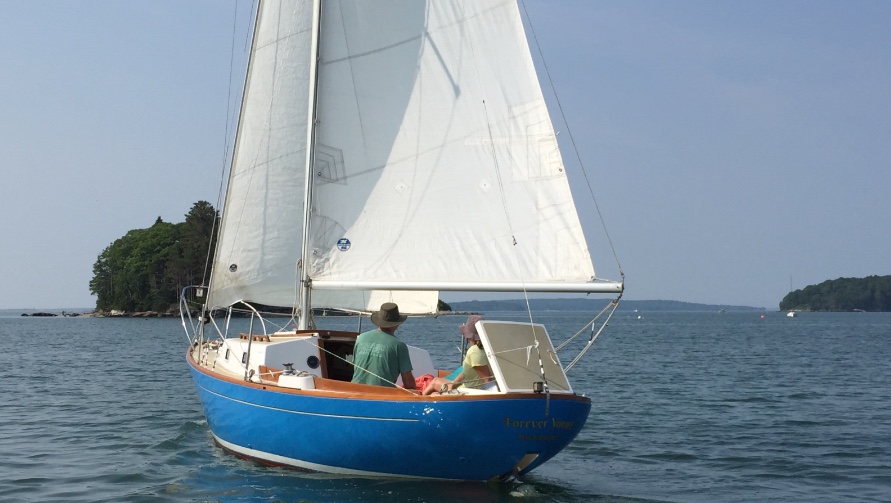
My dual rope clutch for the halyards that sits on the startboard cabintop seems to be about done and has too much play to keep my sails properly up. It seems to be the 1988 original. Would be interested to know what the fleet has done to either repair or replace this dual clutch.
Thanks,
Justin Kermond
#153 Q24
“Forever Young”
Harwichport MA
My 1989 does not have this dual rope clutch. We simply have two cleats on the mast, one on either side. Works fine.
Does anyone know if a canvas cover came with the Quickstep 24? If so,where can I purchase one.John Quirk # 93 Sea-Finn Johnbquirk@yahoo.com
I doubt a canvas cover came with the boat. For a prince’s ransom Fairclough.com will make one for you or many other Mom and Pop custom marine canvas shop as well. Or you can make the frame yourself in an afternoon. I can send you photos of my frame it it would be helpful or I can put them on a photo hosting site I use. There are as many variations as there are sailors with short arms and deep pockets. A 20×30 tarp covers a Q24 with a frame you can stand up in the cockpit under beautifully. A good white one for 60 bucks from Eastern Trailer will last 2 seasons at least and handle 2 feet of wet snow no problem. And in my case Hurricane Sandy with no problems. A 20×30 Harbor freight blue tarp lasts about 6 months for 22bucks. Good for a winter.
Canvas covers get moldy when stored, are very heavy, become hot and stinky and after a few years begin to leak anyway causing the need to spend on repairs which can easily exceed the price of several top of the line new tarps. Not an option for my wallets owner.
Justin: No clutches on my boat originally. I had 2 clunky cleats on the mast which I now ignore. Backup purposes only. For my sailing purposes they were dangerous though a cheap solution for Qstep to sell a boat with. Replaced with 2 Spinlock triple clutches, port and stbd along with 2 small winches and two Harken 3 block organizers at the mast base to lead the lines to the winch and clutch. (Winches are Andersens though I am not sure they still make the smallest single speed model 6 any longer but others are available) I also have a halyard plate under the mast hinge used for mast raising and lowering made for the mast by Dwyermast.com. which allows fitting pulleys to lead lines from the mast to the organizer blocks. From the cockpit I can raise lower and cleat all sails, main, jib , and asymmetric as well as drop and reef the main, control lazy jacks and outhaul. Oh yeah, had an extra which I use for the topping lift too. Everything is right there and I can steer the boat at the same time. Spinlocks are excellent and parts are available at many marine stores or directly from Spinlock. Sounds like a lot but I sail the boat kind of hard and usually singlehanded. Don’t know how to post a pic here. If you want one let me know. I believe the Webmaster will forward email adds.
https://www.dwyermast.com/items.asp?cat1ID=20&cat1Name=Masts&familyID=43&familyName=DM%2D500+Mast
scroll to see the halyard plate and mast hinge.
Sadly, this stuff is not cheap..think Ebay and search there often. I got all mine new but off season for less than 1/2 of list. Though if that is an Awlgrip job on your boat then this is just chump change! PS..topsides and deck look sweet! I just did all my nonskid over with Awlgrip and Griptex this spring. It was a much bigger job than I expected and about 80 hours total and 500 in materials alone. Remove all hdware, sand all molded nonskid off, 2 coats of Awlgrip primer, then finally the topcoat with flattening agent and Griptex and on and on it went. Finally re-bed all hardware. Looks good though. I went with Kingston Grey with 10% Cloud White which came out really well. Maybe the topsides next season but my gelcoat is still real nice. Just tired of the white and may want a change. See what the wallet says next spring.
Justin: Not sure why but my reply to you fell under the Canvas cover question. I musta screwed something up.
An opinion on engine size here…A 4hp will push the boat. However if you need the motor on other than a blue bird day more power is better. Certainly no more than 8hp or 9.8. Motors are not only for days without wind. You can find yourself out in too much wind for you to handle and need to make harbor motoring into the wind. A 4hp or 6hp may be at full throttle with the boat going backwards. Add a bit of current or tide or both coming at you and you will definitely be going backwards. Go up the East River from Upper NY Bay into the Long Island Sound and there is no substitute for power. Tides, winds and currents are found in most sailing locations.
Backing up is another area where moderate additional HP is handy. The toy props on smaller engines simply cannot slow, then stop, then reverse the boat quick enough under most circumstances.